
Auditory-Verbal Therapy for Deaf or Hard-of-Hearing Children

The human cochlea is shaped like a snail shell. Advanced modern technology allows deaf children to access the world of hearing and spoken language by placing a cochlear implant in the inner ear. If parents decide to pursue this option, the child will need a team of therapists and teachers to help with language development. Image by Monika from Pixabay
Listening and Spoken Language (LSL) approaches focus on helping children who are deaf or hard of hearing—whether they use hearing aids or cochlear implants—develop spoken language through listening. This approach is grounded in the idea that human brains are wired for spoken language learning through auditory input, and given access to sound and rich language experiences, children with hearing loss can learn to listen and talk just like their hearing peers.
LSL emphasizes maximizing auditory access to speech, early intervention, and family-centered strategies that occur throughout daily routines. Families are supported to become their child’s first teachers, practicing strategies consistently in everyday moments—from meals and play to reading and bedtime routines.
Children with cochlear implants can especially benefit from this approach because implants provide access to a wide range of speech sounds that can then be shaped into meaningful language with guided practice and intentional listening experiences. hearingfirst.org
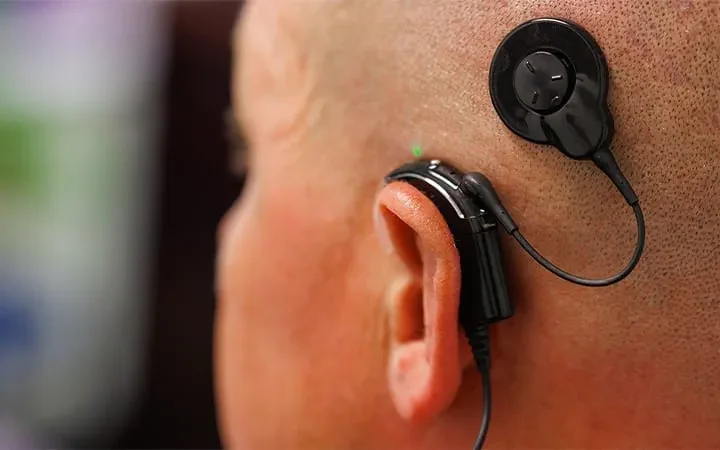
Cochlear Implants and Hearing Aids take time and training for children to learn to use and maintain. Parents, teachers, audiologist and speech pathologists all help children learn to advocate for themselves. Image and article from https://www.uhhospitals.org/blog/articles/2025/10/next-generation-cochlear-implants-protect-natural-hearing
Language Development Strategies to Use at Home
Daily Listening and Language Practices
LSL encourages embedding language into daily life. Talk about routines, describe objects and actions before they happen, and narrate experiences as they unfold. This continuous exposure helps children link sounds to meaning.
One powerful technique is “Hear It Before They See It”, in which you describe sounds or objects before showing them to your child. This enhances auditory attention and reinforces listening first, before visual cues. hearingfirst.org
Key Listening and Language Strategies
There are multiple evidence-based strategies family members can use to foster listening and spoken language. These include:
Create an auditory sandwich: expose your child to sounds/words first without visual cues, then with cues, then again without, to strengthen listening. Clarke Schools for Hearing and Speech
Wait time: after you speak, pause so your child has time to process and attempt a response. heartolearn.org
Acoustic highlighting: emphasize key sounds or words to draw their auditory attention.
Environmental management: reduce background noise to help your child focus on speech.
These techniques are drawn from comprehensive auditory-verbal strategy guides used by professionals and families alike. infanthearing.org
Responsive Interaction
Respond to your child’s attempts to communicate—whether vocalizations, gestures, or words—with enthusiasm and expansion. Repeat what they say and add new information to model richer language use.
Tips for School-Age Children
Listening and Learning in School
As children grow older, LSL strategies continue to support listening, language, and academic success. Ensuring optimal hearing in classrooms (e.g., seating near the teacher, FM/DM systems) can make speech cues more accessible. These tools should be used daily by teachers in all parts of the school, and parents can help by visiting teachers before the school year starts and making sure they know how to help the child maintain, check and clean devices, and know how to trouble-shoot if they are not working properly.
Language Practice Beyond the Home
Encourage your child to participate in group activities, turn-taking conversations, storytelling, and reading aloud. These activities build vocabulary, comprehension, and expressive language skills essential for classroom learning. See my other blog posts for language building ideas!
Advocate for Support
Many school services can provide support for children with hearing loss (such as itinerant teachers, speech-language therapy, and audiological monitoring). Early and ongoing collaboration with educators helps tailor supports to your child’s evolving needs. Parents can ensure that the child is getting the most out of the classroom by including Audiologists, Speech-Language Pathologists and Teachers for the Deaf & Hard of Hearing in annual Individual Education Plan (IEP) meetings.
The greatest advocate for your young child is you—parents! But your child’s greatest advocate as they get older will be themselves! Teach your child about their equipment, how to maintain it and trouble-shoot, but most of all—help them advocate for themselves when something isn’t working, or they’re not able to learn.
Choosing a Speech-Language Pathologist
When selecting a speech-language pathologist (SLP) for a child who is deaf or hard of hearing, experience with auditory habilitation and hearing loss is key. Look for professionals trained in auditory-verbal techniques and who have worked with and trained to help children who use hearing aids or cochlear implants.
Finding an SLP with Listening and Spoken Language Specialist (LSLS) certification may be difficult to find, but others have been trained in auditory-verbal practice, and would be particularly suited to guiding families through evidence-based LSL strategies.
During my clinical externship, I was priveleged to work at Sunshine Cottage, in San Antonio Texas. There I learned from LSL certified SLP’s, Audiologists and classroom teachers, who worked together collaboratively to help children who are deaf or hard-of-hearing learn and use spoken language in school and home. It was a school-family team that was deeply committed to the children’s success, and I learned many principles that helped me be a better clinician. If your child is in need of further speech therapy, please reach out for an evaluation today! becky@coppermountainspeech.com, 385-246-2684
References
Hearing First – LSL Strategies & Techniques (strategies for helping children develop listening and spoken language). HearingFirst.org. hearingfirst.org
Fickenscher, S. & Salvucci, D. – Listening & Spoken Language Strategies (Chapter 7). InfantHearing.org. infanthearing.org
LSL Strategies – Clarke Schools for Hearing and Speech. ClarkeSchools.org. Clarke Schools for Hearing and Speech
Listening and Spoken Language Strategies – Heart to Learn webinar document. HeartToLearn.org. heartolearn.org